Flash Sale - Get 10% Off All Products With Code NOW10
Can EV charging cables safely stay outside in the rain? Learn how weather-resistant EV charging cables work, outdoor charging safety tips, and best practices for charging in wet weather.
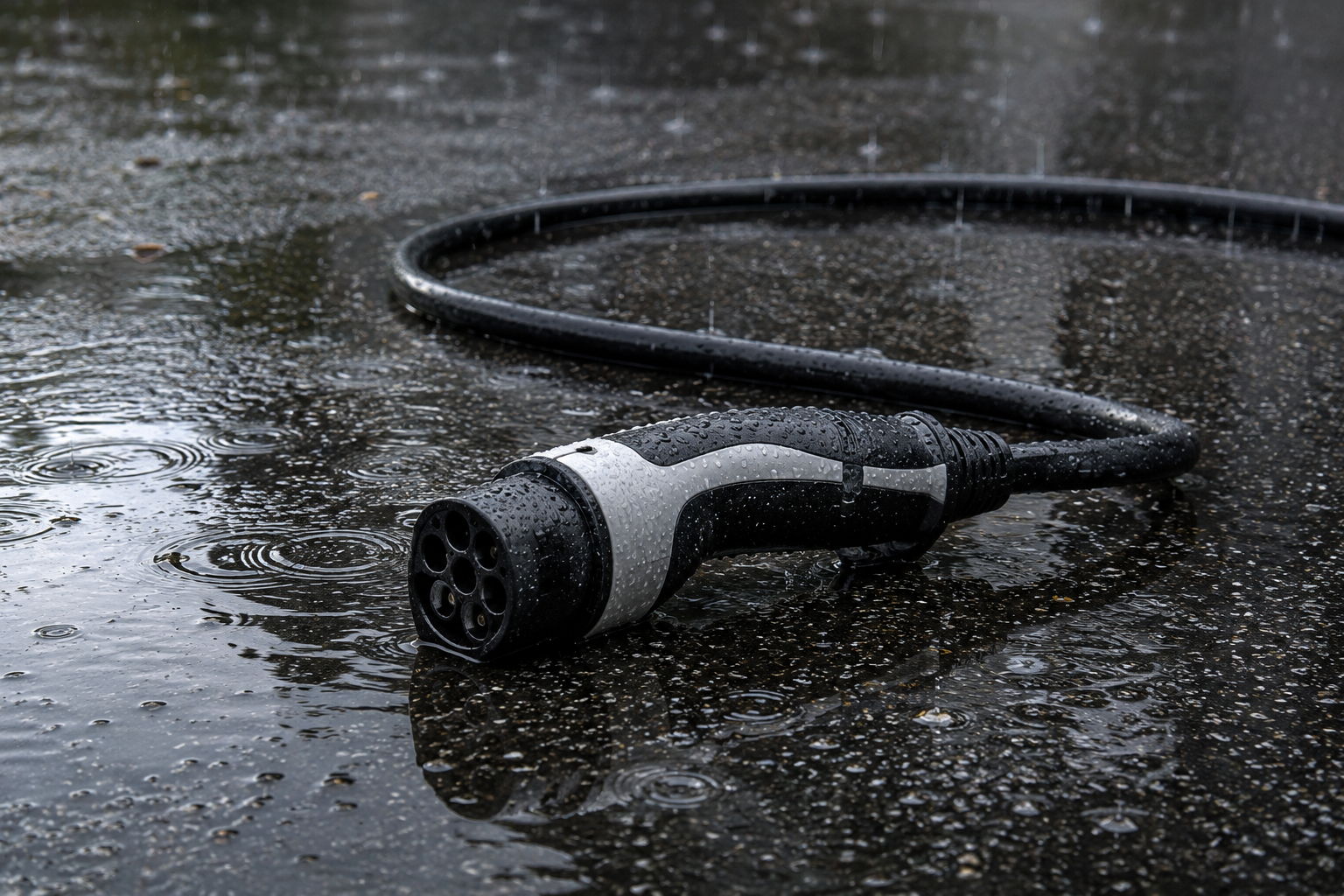
One of the most common concerns new EV owners have is whether it is safe to charge an electric vehicle outdoors in bad weather.
Considering the UK climate, it is a reasonable question.
Fortunately, modern EV charging systems are specifically designed for outdoor use. In normal conditions, EV charging cables can safely remain outside in the rain when used correctly and when the equipment is in good condition.
Electric vehicles are expected to operate in:
However, understanding how EV charging equipment handles water is still important if you want to charge safely and protect your equipment long-term.
Most quality EV charging cables are designed to be weather-resistant rather than fully waterproof in every possible situation.
High-quality EV charging equipment is typically built to withstand:
This includes:
However, no electrical equipment should be treated carelessly around water.
Modern EV charging systems include multiple safety mechanisms designed specifically for outdoor operation.
These typically include:
Power does not flow freely through the connector pins until:
have safely communicated with each other.
This is one reason why EV charging is generally much safer than many people initially assume.
You may see EV charging equipment described with an IP rating.
“IP” stands for Ingress Protection.
This rating indicates how resistant equipment is to:
For example:
Most reputable EV charging cables and charging equipment are designed with outdoor use in mind.
Yes, under normal circumstances.
Public charging stations across the UK operate outdoors year-round in all weather conditions.
When properly manufactured and installed:
are designed to handle rain safely.
You do not normally need to cover the charging connection while charging.
The exterior of the connector can safely get wet during normal use.
However, problems can occur if:
For this reason, it is still important to:
Quality EV charging systems are designed to detect faults quickly.
If unsafe conditions occur, charging systems can:
However, damaged equipment should never be ignored.
If you notice:
the cable should be inspected or replaced.
EV charging cables are designed for outdoor use and can safely be used in rain, snow and typical UK weather conditions. However, this does not mean they should be left permanently exposed to the elements when not in use.
The biggest concern is usually not the cable itself, but the charging connector. If the vehicle end of the cable is left lying on the ground or exposed to repeated rainfall, moisture, dirt and debris can gradually accumulate inside the connector.
Over time, this may lead to:
In more severe cases, prolonged exposure can cause permanent damage to the connector, requiring repair or replacement of the charging cable.
For this reason, it is good practice to:
It is important to understand that EV charging cables are designed to operate safely in wet weather, but they are not intended to be stored indefinitely with the connector exposed to standing water or continuous weather exposure.
Proper storage helps maximise cable lifespan, maintain charging reliability and reduce the risk of avoidable damage.
Cold weather introduces additional challenges.
In winter:
This is usually not dangerous when using quality charging equipment, but careful handling helps avoid unnecessary strain on cables and connectors.
Avoid:
Many people instinctively worry about electricity and water, but modern EV charging systems are heavily engineered around safety.
In many ways:
The charging equipment is specifically designed to operate safely outdoors.
While rain itself is usually not the issue, some charging practices are less safe.
Avoid:
Most charging problems occur because of:
rather than normal rain exposure.
A good EV charging cable should include:
Cheap low-quality charging cables may use:
which can reduce long-term durability.
For safer outdoor EV charging:
Simple maintenance can significantly extend cable lifespan.
Modern EV charging cables are designed to operate safely outdoors, including in rainy UK weather.
When using quality charging equipment correctly, charging an EV in rain is generally completely safe.
The key is ensuring:
As EV adoption continues to grow, outdoor charging is becoming an everyday part of vehicle ownership. Choosing reliable charging equipment and following sensible charging practices helps keep charging safe in all weather conditions.
Yes. Quality EV charging cables are designed for outdoor use and can safely handle normal rain and moisture exposure.
Yes, modern EV charging systems are designed with weather-resistant safety protections for outdoor charging.
Most EV charging cables are weather-resistant and designed for outdoor use, though they should not be submerged in water.
While EV charging cables are designed for outdoor use, it is not recommended to leave them permanently exposed to the elements when not in use. Over time, rain, dirt and debris can affect the charging connector and may lead to corrosion, charging faults or premature wear. Storing your cable properly can help extend its lifespan.
Many quality EV charging products use ratings such as IP44 or higher for outdoor weather resistance.